A change of leadership in Westminster has created an opportunity to deliver a genuine “high street renaissance”, after a decade in which too many local parades, high streets and town centres have been allowed to drift.
Andy Burnham has put the principle of place at the heart of his agenda. On winning Makerfield, he called for a “Makerfield test” at the centre of British politics, judging every decision by its impact on the many communities that Westminster has too often overlooked.
If the Makerfield test is to mean anything, it must be applied where people encounter the condition of their community. Putting place first means recognising that a thriving local shop, a clean and safe parade, and easy access to everyday essential services are not nice-to-haves. They are the infrastructure of community life, and the clearest measure of whether a place is working for the people who live there.
The Association of Convenience Stores’ Community Barometer 2026 explores what it means to put place first through the lens of local high streets and community services.
High streets have been left behind by Westminster.
Westminster has spent years debating how to save Britain’s high streets. Commission after commission, review after review, the diagnosis is revisited, and yet the structural change needed to deliver real improvement is consistently sidestepped.
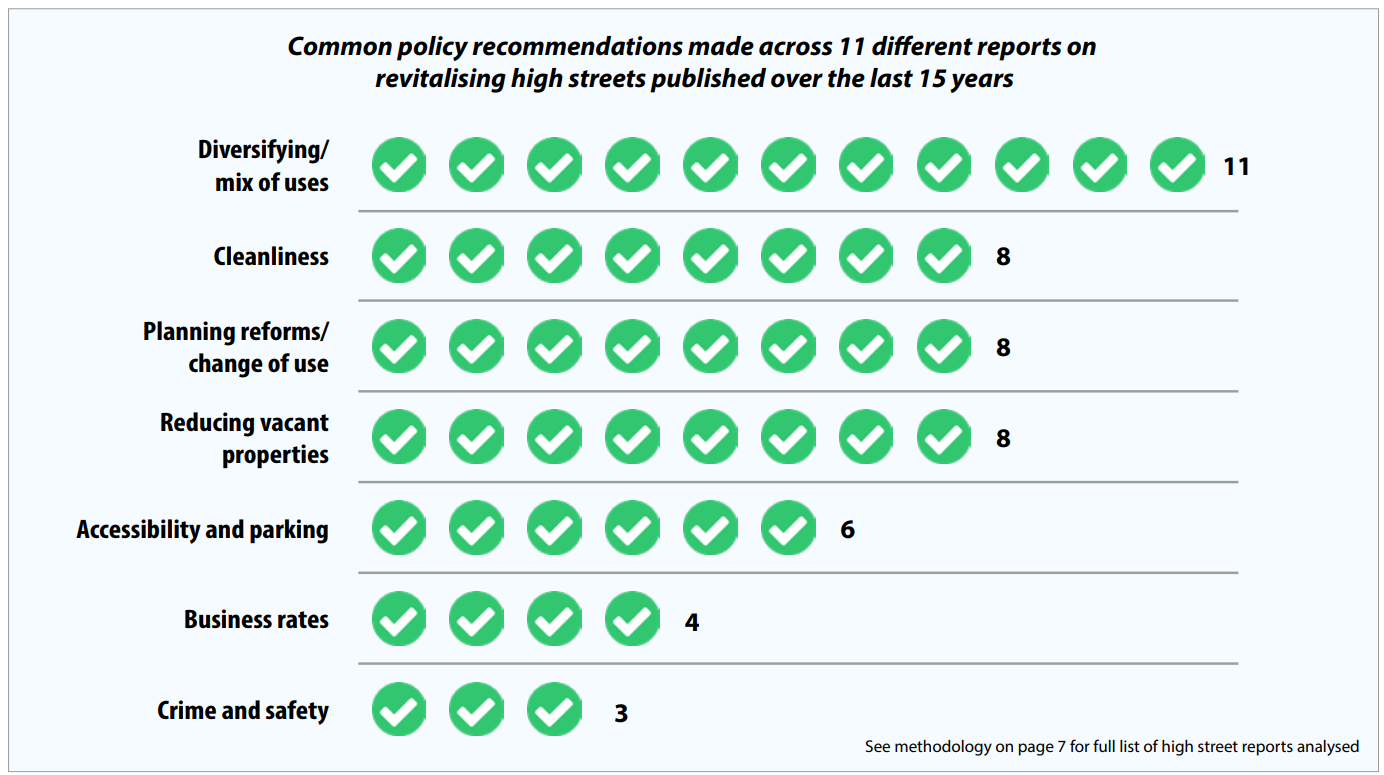
Our analysis of the policy recommendations across 11 reports on high streets published in the last 15 years tells a remarkably consistent story. Time and again, the same priorities emerge: Diversification of businesses/services, action to tackle the rise in empty properties, reform of planning policy, and cleanliness. These are not fringe concerns or competing theories, they are the settled, repeated conclusions of government departments, parliamentary committees, think tanks and industry alike.
Yet for all the consensus on what needs to change, action on these fundamentals has been piecemeal at best. Business rates reform remains unfinished. Planning policy continues to work against, rather than for, vibrant town centres, and retailers still face levels of crime and anti-social behaviour that drive footfall away and units into vacancy.
In his first major speech, Andy Burnham made devolving power to local communities central to his vision, recognising that decisions about places are best made closer to those places.
The public agrees, as our polling shows below.
How people feel about their high streets
Local high streets are often totemic in how they make people feel about the success of their local communities.
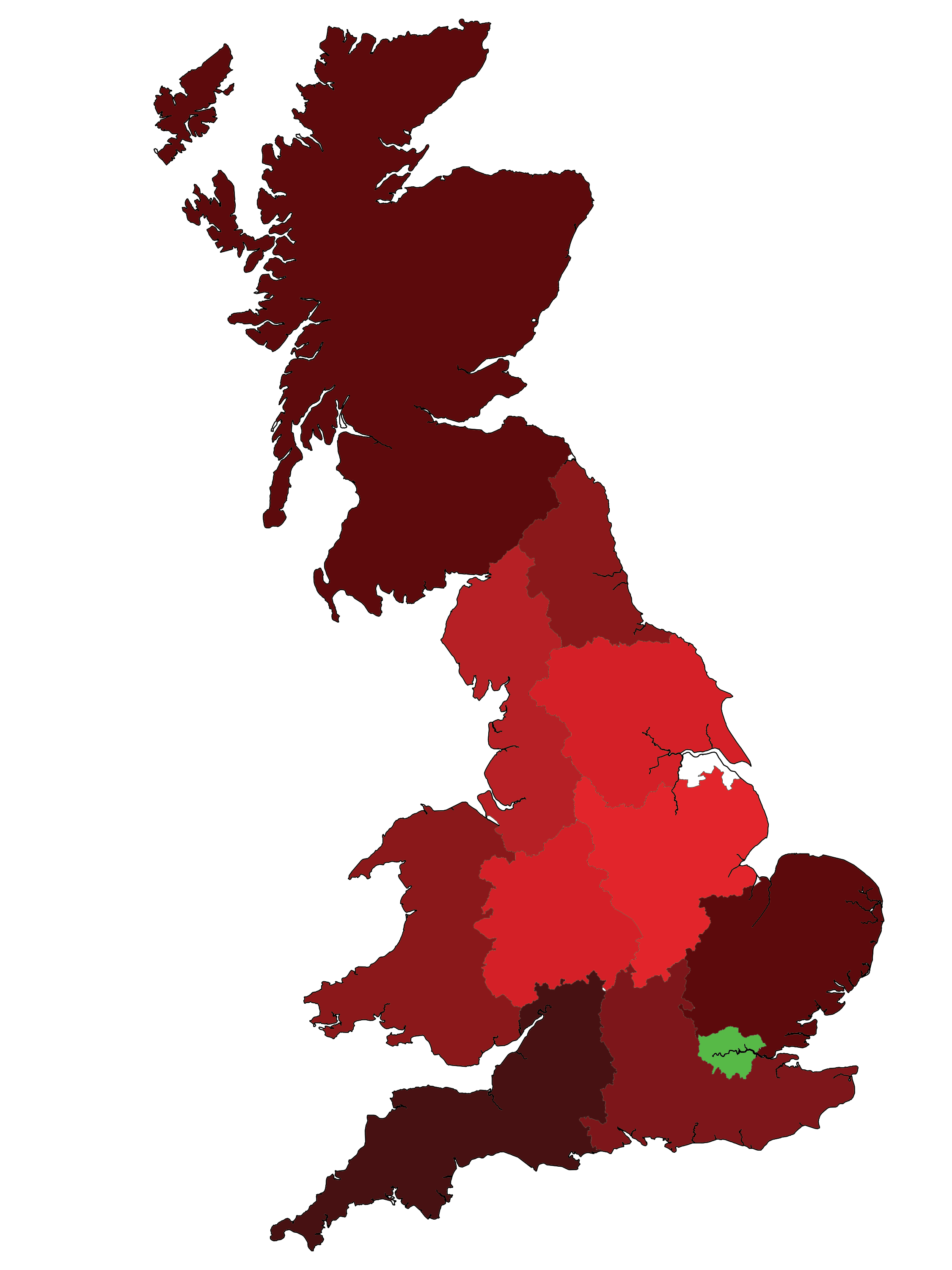
The overall picture across the UK is one of decline: more people believe their high street has gotten worse over the past year than believe it has improved.
This sense of decline is not felt evenly across the UK. When we look at the nine regions of England along with Wales and Scotland, it is clear that there is a divide between London and everywhere else. Greater London was the only region surveyed that reported a net positive change in their high streets over the last year, with areas like the South West, Scotland and the East of England feeling worst affected by negative high street change.
The regional High Streets Index enforces the idea that London is treated more favourably both commercially and by policymakers than the rest of the country.
What makes your high street better or worse?
To deliver meaningful changes we have to listen closely to what people want from their high streets and be clear about what can be delivered.
Decline on high streets is not inevitable. The factors that contribute to a high street’s deterioration are, for the most part, the same factors that can support its recovery, and the public identifies them with notable consistency.
The evidence points to a clear and consistent set of priorities: addressing crime and anti-social behaviour, returning empty units to use by reducing the cost of trading, maintaining clean environments, and ensuring accessibility.
These are the determinants of a high street’s success or failure, and, as the following sections set out, they are precisely where action is required.
The businesses that matter most to local communities.
When people consider what they most want close to home, the answer is consistent: access to essential, everyday services. In terms of close vicinity to where people live, people continue to want access to essential services like pharmacies, Post Offices and convenience stores.

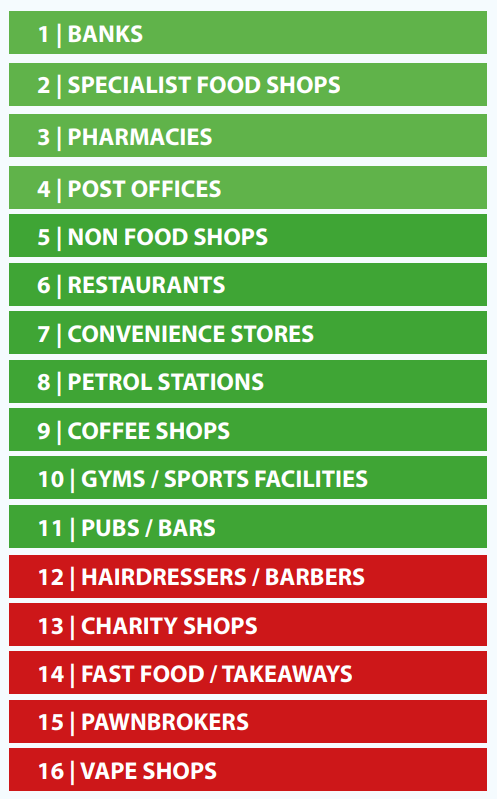
More than half of the services that we polled local people on are ones that they want more of in their community, highlighting in particular the need to address empty properties - businesses that were serving a community but haven’t been replaced.
The services in green are the ones people want to see more of in their local area, with banks, specialist food shops (like bakeries) and pharmacies making the top three.
Banks, in particular, consistently feature at the top of this 'most wanted services' list. As bank branches continue to close across the UK, people notice their absence more than any other service on our list.
Local shops and post offices provide access to cash to help fill the void left by these closures, but shoppers are still left wanting for a vital high street service. You can read more about payments and services from a local shop perspective here.
This comes with caution however, as the services in red are those that people believe there are too many of, acting as subtle indicators of a declining high street.
The value of local shops also extends well beyond the transactional. 51% of people agree that their local shop acts as a community hub, and 54% agree that it helps to reduce loneliness in their community.
Local shops also help people during this enduring cost of living crisis; saving people money on fuel by being local enough to walk to, helping people manage their money by providing access to cash, and avoiding delivery charges that people would experience online.
Convenience stores are part of the essential economic and social fabric of communities: a source of everyday provision, a support to household finances, a point of human contact, and a stabilising presence when communities are under strain.
Any strategy that seeks to put place first must recognise, and protect, the businesses that people themselves identify as integral to local life.