Content provided by Trovr:
By Nick Yeatman, CEO and founder of Trovr
If you operate a convenience store, newsagent, or off-licence in the UK, October 2027 will mark one of the most significant operational changes your business has faced in years. Yet despite being just over 18 months away, many independent retailers remain uncertain about what the Deposit Return Scheme (DRS) means for them, or how to prepare without breaking the bank.
The headlines have focused on environmental wins and supermarket rollouts. What's been missing is the practical reality for the UK’s 50,000+ independent retailers: stores with tight margins, limited space, and staff stretched across multiple roles. This isn't about whether DRS is a good idea. It's about understanding what's required of you, what your options are, and why acting now could turn a compliance headache into a genuine business opportunity.
What DRS Actually Requires of You
From 1 October 2027, any grocery retailer selling drinks in PET plastic bottles and aluminium and steel cans covered by the scheme must accept those containers back and refund customers a 20p deposit. This isn't a voluntary initiative or a trial phase - it's legally mandated. Fail to comply, and you could face enforcement action or fines.
On the surface, it sounds straightforward: customer buys a drink, pays 20p extra, returns the empty container, gets 20p back. But behind that simple transaction lies a new operational burden. You'll need to verify returned containers are eligible (not every bottle qualifies), store them hygienically and securely, manage the deposit refunds, and arrange collection - all while running your day-to-day business.
For major supermarkets, this fits relatively smoothly into existing logistics. They have the floor space, the budgets, and the back-office systems to absorb the change. Lots have already begun installing Reverse Vending Machines (RVMs), many costing upwards of £10,000 or more—machines designed for high-volume, large-format stores.
But what about a convenience store with 800 square feet and three staff members?
The Real Challenge: Cost and Space
Traditional RVMs weren't built with independent retailers in mind. They're expensive, bulky, and designed for supermarket-scale operations. For most convenience stores, spending five figures on equipment simply isn't viable - and finding space for a machine the size of a vending unit is impossible.
The alternative, manual handling, comes with its own problems. Storing bags of returned containers behind the counter creates operational and hygiene risks, particularly for stores with hot food licences. Staff must handle potentially sticky or contaminated bottles and cans throughout the day. Storage areas become cluttered with bags that must be secured like cash, because they contain deposit value until collection. It's messy, time-consuming, and exposes your business to contamination concerns that regulators take seriously.
Many independent retailers have assumed they'll either receive an exemption or find a workaround closer to the deadline. Is that the best commercial approach? There is strong data available that shows footfall and therefore revenue is damaged by not providing a DRS take back service to your local community and customers. Your regular customers will visit where they can recycle their DRS bottles and claim back their deposits. The question to ask is ‘Would you be happy to see your regulars go to a different store that offers DRS recycling?’
The scheme has a target to achieve 90% collection rates across the UK, and that only works if containers can be returned conveniently across all retail formats - not just at supermarkets. Independents aren't automatically being exempted. You're expected to participate.
Why This Could Be an Opportunity, Not Just a Burden
Here's the part of the story that often gets overlooked: in countries where DRS has been operating for decades, places like Denmark, Germany, and Sweden, return points have become reliable drivers of footfall. Customers make regular trips to return containers, and while they're in-store, pick up essential groceries like bread, milk, a newspaper and coffee. It becomes routine, like using an ATM or a parcel locker. Being a return point also allows retailers to also become an essential part of the local recycling infrastructure - a community asset, not just a place to buy goods.
There is a financial benefit too - retailers also earn handling fees, typically 1- 2p per container. That might not sound like much, but in a busy store processing hundreds of returns per week, it adds up.
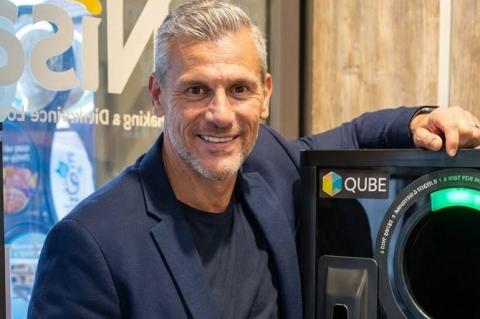
The key is finding a solution that works for your space and budget. Compact, lower-cost technologies now exist that eliminate the manual handling burden without requiring supermarket-scale investment. These systems, such as our TrovrQUBE, are roughly the size of an ATM, scan and verify containers automatically, and connect digitally to an EPOS (electric point of sale) so you can track activity and even run promotions through the Trovr Marketing platform which offers retail media advertising in-store. The TrovrQUBE technology costs a fraction of traditional RVMs and fits into spaces that were previously unusable.
Retailers using these systems also gain access to real-time data on customer behaviour via the Trovr marketing service allowing them to send targeted offers to regular customers that encourage repeat visits and higher basket spend. What initially looks like regulatory compliance becomes a tool for building loyalty and increasing revenue.
What You Should Do Now
First, embrace the commercial opportunity with a business mindset. Don't wait for clarity that may never come. The scheme is mandated by law, and while some details are still being finalised, the core obligation won't change: grocery stores who sell in-scope drinks must accept returns.
Second, assess your space and budget realistically. If manual handling feels unworkable, and for most stores it will be, explore affordable technology options now, while you still have time to plan.
Third, engage with your suppliers, symbol groups, and trade bodies like the ACS. Ask what support is available, whether through equipment subsidies, shared collection networks, or cooperative purchasing schemes. You're not alone in facing this challenge, and collective action will be far more effective than going it alone.
Finally, reframe how you think about DRS. Yes, it's a new obligation. But it's also, with the right technology solution, a significant revenue stream plus an opportunity to become a more visible, valuable part of your community. Countries with established DRS programmes have proven the model works. Recycling rates consistently exceed 85%, litter drops, and customers adapt quickly. Within a year of launch, returning bottles became as routine as paying by card.
The UK's DRS is coming, and independent retailers will be central to its success. With the right preparation and the right tools, you can turn October 2027 from a compliance deadline into a competitive commercial advantage.
About the Author:
Nick Yeatman is CEO of Trovr, a UK-based recycling technology company that has developed compact return solutions for independent retailers preparing for DRS compliance.